Explore our foundational range of customized advanced carbon fiber and high-performance composite products manufactured under strict ISO and CE guidelines.
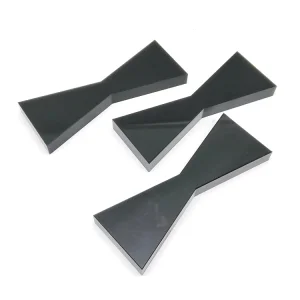

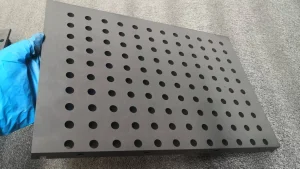
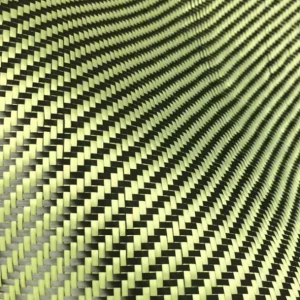
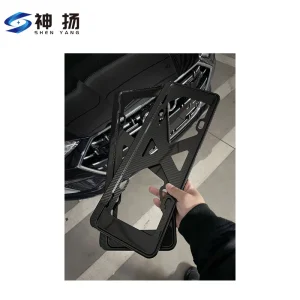
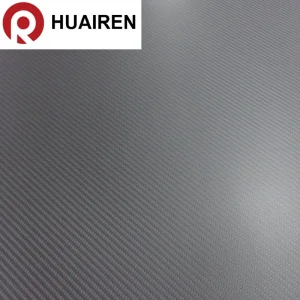
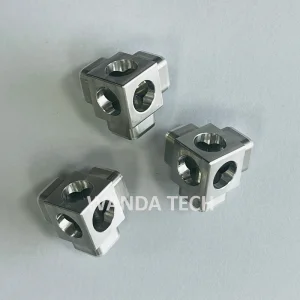

As modern engineering trends lean decisively toward structural optimization, carbon fiber reinforced polymer (CFRP) composites have evolved from niche materials into indispensable cornerstones of high-load structural design. As a specialized engineering discipline, the deployment of CE certified carbon fiber load-bearing structures represents the zenith of lightweighting combined with ultra-high mechanical security.
Guangzhou RAXis Fiber Co., Ltd. is a professional manufacturer specializing in carbon fiber sheets, tubes, and custom composite products, delivering lightweight and high-strength solutions for global industries. Based in Guangzhou, China, we integrate research, development, production, and sales to provide advanced carbon fiber materials tailored to diverse application needs. Our systems are engineered to withstand complex dynamic loads while significantly cutting overall dead weight, which translates directly to fuel efficiency in transit systems and reduced energy footprints in industrial automation.
By using premium polyacrylonitrile (PAN)-based carbon fibers embedded in custom-engineered matrix systems (including epoxy, bismaleimide, and polyetheretherketone), we build structures capable of handling high tensile, compressive, and torsional stresses. RAXis Fiber addresses macro-level challenges such as marine corrosion, seismic retrofitting, and high-altitude aerodynamic loads, delivering durable solutions across the aerospace, automotive, infrastructure, and automation sectors.
Minimizing weight increases payload capabilities and fuel range for military and commercial unmanned aerial vehicles (UAVs).
Zero oxidation makes CFRP structures suitable for chemical plants, offshore oil rigs, and high-humidity marine operations.
Ensures precision alignment in medical equipment and industrial robotics over decades of high-cycle operations.
The transition from traditional metals (such as structural steel, aluminum alloys, and titanium) to carbon fiber composites has accelerated globally. In modern transportation and industrial machinery, engineers face a tough challenge: increasing system speeds and load-bearing capacities without driving up energy requirements or wear. Because carbon fiber boasts an exceptional strength-to-weight ratio—up to 5 times stronger than grade 6061 aluminum and 3 times stronger than structural steel at a fraction of the mass—it offers a practical solution to this structural dilemma.
Worldwide demand is highly concentrated in areas where structural failure is not an option. For instance, the commercial aviation sector leverages CFRP for wing spars, fuselage panels, and control surfaces. Similarly, the automotive industry uses it to build impact-resistant safety cages and lightweight monocoques that offset battery weight in electric vehicles. As a result, sourcing from certified carbon fiber manufacturers who can guarantee consistent material properties, defect-free lamination, and full regulatory compliance is crucial for maintaining international supply chain integrity.
To highlight the structural differences between these materials, the table below compares standard high-modulus carbon fiber composite with common structural metals:
| Material Metric | High-Modulus Carbon Fiber (CFRP) | Titanium Alloy (Ti-6Al-4V) | Structural Steel (ASTM A36) | Aluminium Alloy (6061-T6) |
|---|---|---|---|---|
| Density (g/cm³) | 1.55 - 1.60 | 4.43 | 7.85 | 2.70 |
| Tensile Strength (MPa) | 1200 - 2400 (Directional) | 900 | 400 | 310 |
| Elastic Modulus (GPa) | 130 - 230 (Axial) | 114 | 200 | 68.9 |
| Specific Strength (kN·m/kg) | 750 - 1500 | 203 | 51 | 115 |
| Thermal Expansion (10⁻⁶/K) | -0.5 to 1.2 | 8.6 | 12.0 | 23.5 |
For load-bearing systems used in Europe and other regions with strict safety standards, CE certification is not just a formality—it is a critical legal and safety requirement. Structural components must comply with the European Construction Products Regulation (CPR) No 305/2011 and harmonize with standards like EN 1090 (execution of steel and aluminum/composite structures) and EN 1990 (Eurocode - Basis of structural design).
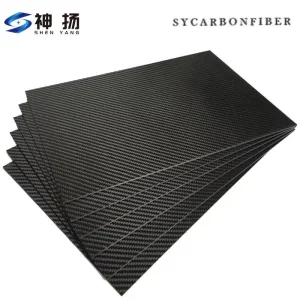
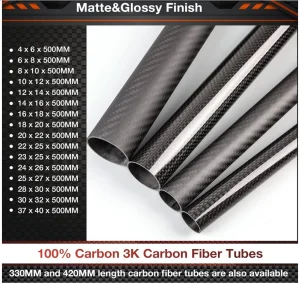
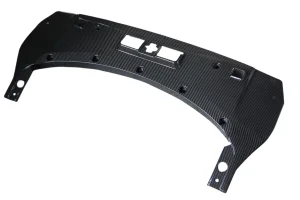
Our product portfolio includes carbon fiber sheets, tubes, plates, CNC-machined parts, and customized composite components widely used in aerospace, automotive, drones, sports equipment, and industrial structures. With a focus on precision engineering and material innovation, we ensure each product offers excellent strength-to-weight ratio, corrosion resistance, and long-term durability. Achieving a valid CE mark requires meticulous documentation, certified raw materials, and traceable manufacturing stages.
Guangzhou RAXis Fiber Co., Ltd. ensures compliance through a rigorous quality control framework. We trace every batch back to the original carbon fiber precursor lot. This means verifying yarn characteristics (such as K-count, sizing type, and tensile modulus) before the material is impregnated or processed in our cleanrooms. This focus on traceability ensures that each structural sheet, tube, or custom part performs reliably under real-world loads.
Applying composite designs to structural projects requires a deep understanding of anisotropic material behavior. Unlike isotropic metals, which exhibit identical physical properties in all directions, CFRP composites are highly directional. Engineers must tailor the fiber orientation to match the specific stress paths of each project. We offer three primary technical pathways to achieve this precision:
Every structural project begins with digital simulation. Using Finite Element Analysis (FEA), we model directional stress distributions under extreme loads. Based on these simulations, we optimize the laminate stack-up sequence (using 0°, 90°, and ±45° plies) to maximize load capacity while minimizing raw material weight. This targeted approach prevents over-engineering and keeps components as light as possible.
For applications where voids and micro-cracks are critical points of failure, we use autoclave curing. By applying pressures up to 7 bar and temperatures exceeding 180°C, we compress the prepreg layers, driving out microscopic air bubbles. This results in structural parts with void content below 0.5%, maximizing inter-laminar shear strength and preventing premature delamination under cyclic fatigue.
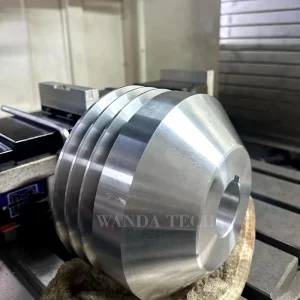
Raw composite structures require precise post-cure machining to integrate with metal assemblies. Because carbon fiber is highly abrasive and prone to delaminating during drilling, we use custom-designed PCD (polycrystalline diamond) tooling on high-speed CNC machines. To protect the finished components from outdoor elements, we apply UV-blocking clear coats and chemical-resistant barriers that prevent galvanic corrosion when the composite meets aluminum or steel fasteners.
Equipped with modern production facilities and experienced technical teams, RAXis Fiber maintains strict quality control throughout the entire manufacturing process, from raw material selection to final inspection. We also provide flexible OEM and ODM services, supporting clients with custom designs, rapid prototyping, and scalable production. Driven by continuous innovation and customer-oriented service, we are committed to delivering reliable products, competitive pricing, and efficient lead times. Guangzhou RAXis Fiber Co., Ltd. strives to be a trusted partner in providing lightweight composite solutions that enhance performance and efficiency across multiple industries worldwide.
Looking ahead, our technical roadmap focuses on three main development areas designed to meet the evolving demands of the global industrial sector:
Technical guidance and engineering answers directly from our quality assurance and design teams.
Explore our broader range of specialized composite components, hardware integrations, and carbon fiber materials designed to meet diverse industrial standards.
 RAXIS Fiber