Precision-engineered composite components designed for maximum structural rigidity, sub-zero thermal cycling endurance, and extreme impact damping. Optimized for Erdenet's challenging terrain and industrial transport applications.

As the economic epicenter of Orkhon Province and host to one of the world’s most substantial copper mining complexes, Erdenet represents a uniquely demanding micro-climate and industrial ecosystem. The convergence of high-altitude ultraviolet radiation, sub-zero continental winter dynamics ($\Delta T$ exceeding $70^\circ\text{C}$ annually), and rugged topographic requirements creates a high-barrier environment for mechanical components. Traditional metallic structures—specifically 6061-T6 aluminum and 4130 chromoly steel—frequently succumb to fatigue failure, galvanic oxidation under de-icing agents, or unwanted weight penalties that severely compromise payload efficiency in commercial and recreational micro-mobility solutions.
Our composite laminates utilize specialized epoxy resin systems optimized for near-zero coefficient of thermal expansion (CTE), maintaining structural alignment across extreme temperature shifts from -40°C in Erdenet winters to peak summer heat.
Erdenet's mining particulate conditions demand enhanced outer-layer resin density. We integrate nano-silica modified clearcoats and sacrificial PPCM layers to prevent surface micro-fracturing from high-velocity particle impact.
By leveraging Japanese Torayca T700S and T800S carbon fibers, our parts achieve specific stiffness ratios exceeding titanium alloys by 300%, eliminating unwanted frame flex during heavy-load climbs across Mongolian step terrain.
Global procurement networks supplying Northern Asia are undergoing a structural shift toward Advanced Fiber-Reinforced Polymers (FRP). For regional distributors, fleet operators, and high-performance bike builders in Erdenet, carbon fiber is no longer merely a luxury racing cosmetic—it is an essential engineering strategy for reliability. By replacing traditional aluminum assemblies with continuous carbon fiber weaves cured under high-pressure autoclave environments, failure rates associated with cold-temperature embrittlement are virtually eliminated.
Connecting Global Composite R&D with Regional Distribution in Erdenet and North-East Asian Industrial Hubs.
Guangzhou RAXis Fiber Co., Ltd. is a professional manufacturer specializing in carbon fiber sheets, tubes, and custom composite products, delivering lightweight and high-strength solutions for global industries. Based in Guangzhou, China, we integrate research, development, production, and sales to provide advanced carbon fiber materials tailored to diverse application needs.
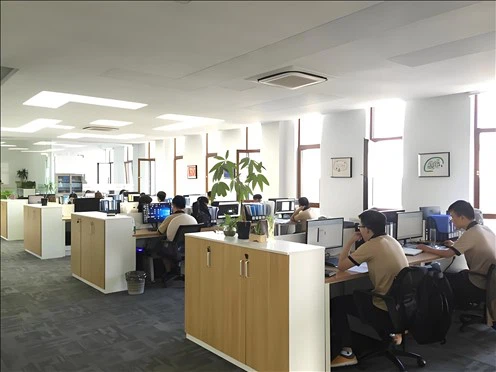
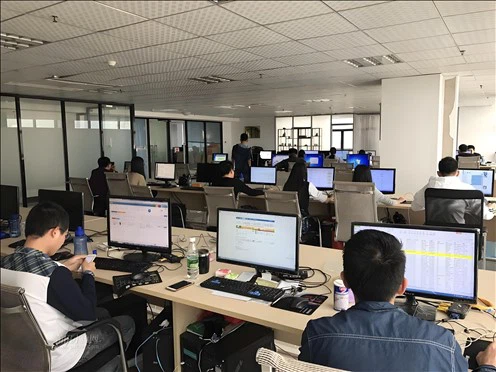
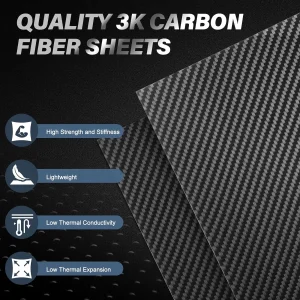
Our product portfolio includes carbon fiber sheets, tubes, plates, CNC-machined parts, and customized composite components widely used in aerospace, automotive, drones, sports equipment, and industrial structures. With a focus on precision engineering and material innovation, we ensure each product offers excellent strength-to-weight ratio, corrosion resistance, and long-term durability.
Equipped with modern production facilities and experienced technical teams, RAXis Fiber maintains strict quality control throughout the entire manufacturing process, from raw material selection to final inspection. We also provide flexible OEM and ODM services, supporting clients with custom designs, rapid prototyping, and scalable production.
Driven by continuous innovation and customer-oriented service, we are committed to delivering reliable products, competitive pricing, and efficient lead times. Guangzhou RAXis Fiber Co., Ltd. strives to be a trusted partner in providing lightweight composite solutions that enhance performance and efficiency across multiple industries worldwide.
Our commitment to Information Gain and technical excellence is demonstrated through transparent engineering standards. Here is how RAXis Fiber manufactures components that exceed international aerospace and cycling criteria:
| Manufacturing Parameter | Autoclave Cure Process (PPCM) | Compression Molding (PCM) | Wet Layup (Standard Competitor) |
|---|---|---|---|
| Fiber Volume Fraction ($V_f$) | 65% - 70% (Maximum Density) | 55% - 60% | 35% - 45% (Resin Heavy) |
| Void Content Percentage | < 0.5% (Void-Free Integrity) | < 1.5% | > 3.5% (High Delamination Risk) |
| Glass Transition Temp ($T_g$) | 145°C to 180°C High-Toughness Epoxy | 120°C - 140°C Standard Epoxy | 90°C - 110°C Polyester/Vinyl Ester |
| Flexural Modulus | 135 GPa | 110 GPa | 65 GPa |
| Sub-Zero Impact Resistance | Certified down to -40°C | Certified down to -20°C | Prone to Micro-Cracking at < 0°C |
Using CAD/CAM precision cutters, unidirectionally oriented carbon fiber prepregs are layered according to finite element analysis (FEA) stress maps. Torsion zones utilize 45-degree biased weaves, while longitudinal stiffness zones incorporate 0-degree unidirectional plies.
Components undergo thermal vacuum degassing under 6 to 8 bar of positive pneumatic pressure. This eliminates air pockets and micro-voids, ensuring that parts shipped to the Erdenet market possess structural homogeneity.
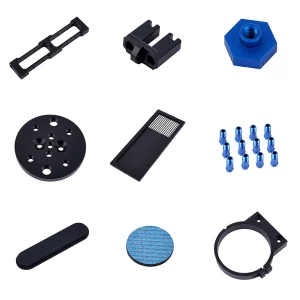
Post-curing, raw composite parts are milled on 5-axis CNC machining centers equipped with diamond-coated tooling. Structural bolt holes, frame joints, and tolerances are held within tight limits of ±0.05 mm.
To combat intense high-altitude UV radiation in Mongolia, every component receives a multi-layer automotive-grade polyurethane topcoat, offered in matte or ultra-gloss finishes.
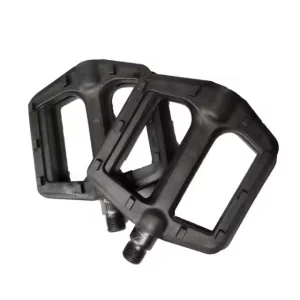
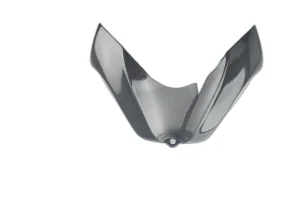
Explore our wide selection of certified composite parts engineered for bicycles, light electric vehicles, drones, and specialized high-durability machinery.


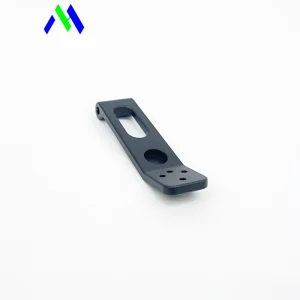
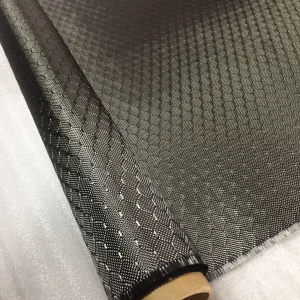
For custom mobility integration, race teams, and retail distributors in Erdenet requiring exact replacement or custom molded structural parts, Guangzhou RAXis Fiber Co., Ltd. provides full turn-key manufacturing from CAD file to delivered cargo.

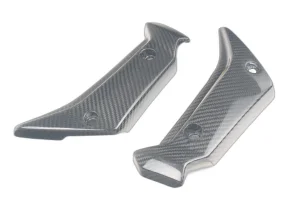
Streamlined international logistics designed to guarantee component integrity during cross-border transit from Guangzhou to Northern Mongolia.
We leverage rail cargo (China-Mongolia-Europe direct routes via Erenhot / Zamyn-Uùd) and air freight to Ulaanbaatar (UBN) with express overland feeder routes straight to Erdenet businesses.
Every carbon fiber chain guard, frame joint, and fender is wrapped in anti-static protective film, encased in custom high-density EPE foam, and sealed in export-grade multi-layer corrugated boxes.
Complete documentation standard with every B2B dispatch: Commercial Invoices, Packing Lists, Certificate of Origin (Form E), Material Inspection Certificates, and HS Code Classification for seamless Mongolian customs entry.
Addressing structural, chemical, and procurement queries regarding carbon fiber parts serving Erdenet importers and OEM clients.
Partner with Guangzhou RAXis Fiber Co., Ltd. for factory-direct carbon fiber bicycle components, custom composite CNC machining, and dependable international delivery.
Send Inquiry Now RAXIS Fiber